- 01535 652338
- mail@watsonsbs.com


Blog
The Importance of Indoor Air Quality in Commercial Buildings
WBS
General
Indoor Air Quality (IAQ) has become a defining factor in how commercial buildings perform. Beyond basic comfort, it directly influences occupant health, cognitive function, and overall operational efficiency. For facilities managers and building operators, IAQ is no longer a secondary consideration; it is central to compliance, ESG performance, and long-term asset value.
Indoor Air Quality refers to the condition of air within a building, shaped by pollutant concentrations, ventilation effectiveness, temperature, and humidity. In commercial environments, IAQ is dynamic. It is affected by occupancy patterns, HVAC performance, building materials, and the quality of incoming outdoor air.
While often invisible, poor IAQ can have measurable consequences across both human performance and building systems.
INNOVATION, EXPERTISE, EXCELLENCE
Expert Ventilation System Design, Installation + Maintenance
From offices and healthcare environments to large industrial spaces, Watsons Building Services delivers tailored solutions that effectively manage heat loads, optimise airflow, and ensure full compliance with energy efficiency regulations.
FIND OUT MORE
Why Indoor Air Quality Matters
The impact of IAQ is most clearly seen in occupant health. Poor air quality is associated with respiratory issues, fatigue, and headaches, and in more severe cases, contributes to long-term health risks. The World Health Organisation estimates that indoor air pollution causes approximately 2.9-3.2 million deaths globally each year, depending on the dataset and reporting period.
However, the commercial implications extend beyond health alone. One of the most compelling drivers for improving IAQ is its direct effect on productivity.
IAQ and Cognitive Performance
Research from the Harvard T.H. Chan School of Public Health (COGfx Study) demonstrates that cognitive performance is highly sensitive to indoor air conditions. As CO₂ levels rise, typically due to insufficient ventilation, decision-making ability, concentration, and overall cognitive function decline. This relationship is illustrated below:
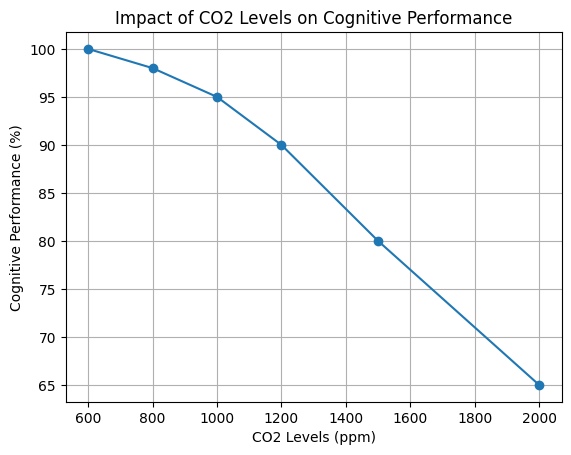
Cognitive performance declines as indoor CO₂ levels rise, particularly above 1000 ppm.
At concentrations above 1000 parts per million (ppm), a noticeable drop in cognitive performance occurs, with more significant impairment as levels continue to rise. In practical terms, this means a building’s ventilation strategy is not just an engineering concern; it directly affects how effectively people work within a space.
IAQ, Absenteeism and Workplace Performance
In addition to productivity, poor IAQ contributes to higher rates of absenteeism. Environments with inadequate ventilation and elevated pollutant levels are more likely to cause discomfort and illness, leading to increased sick days and reduced workforce stability.
The trend below highlights this relationship:
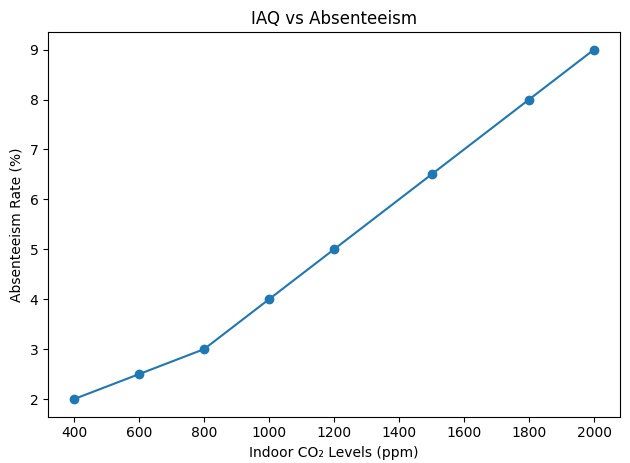
Higher CO₂ levels and poor ventilation are associated with increased workplace absenteeism.
As CO₂ levels increase, absenteeism rates tend to rise alongside them. While the exact figures vary by building type and usage, the direction of this relationship is well supported by research from the World Green Building Council and broader occupational health studies.
For organisations, this translates into tangible cost implications, as lost productivity and staff absence continue to impact operational performance.
The Role of HVAC Systems in IAQ
In many commercial buildings, IAQ issues develop gradually rather than as a result of a single failure. Ageing ventilation systems, inconsistent maintenance, and increasing occupancy demands often combine to reduce air quality over time.
Poor filtration, blocked airflow paths, and uncontrolled external pollution can further degrade internal conditions. Without active monitoring, these issues can persist unnoticed, despite their ongoing impact on occupants.
Heating, ventilation, and air conditioning systems are the primary mechanism for controlling indoor air quality. Well-designed ventilation systems ensure a consistent supply of fresh air while removing contaminants and excess CO₂. Technologies such as mechanical ventilation with heat recovery (MVHR) allow this to be achieved efficiently, maintaining air quality without excessive energy use.
Filtration also plays a critical role. Higher-grade filters are capable of removing fine particulates and airborne contaminants, particularly in high-occupancy or sensitive environments. At the same time, air conditioning systems contribute by stabilising temperature and humidity, two key factors that influence both comfort and air quality.
However, the effectiveness of these systems depends heavily on maintenance. Poorly maintained HVAC systems can quickly become a source of contamination rather than a solution.
Balancing IAQ with Energy Performance
One of the most common challenges in commercial buildings is balancing ventilation requirements with energy efficiency. Increasing ventilation rates improves air quality, but it also raises energy demand if not properly managed.
As ventilation rates increase, so does the energy required to heat, cool, and move that air. This is why modern building strategies focus on intelligent solutions such as demand-controlled ventilation and heat recovery systems, which optimise air quality without unnecessary energy consumption.
In many cases, improving IAQ and improving energy efficiency are not competing goals. Poor air quality often indicates inefficient system operation, meaning that targeted upgrades can deliver gains in both areas.
CASE STUDY SPOTLIGHT
HVAC & Mechanical Upgrades at a Medical Facility in Bradford
A recent healthcare HVAC project delivered improved indoor air quality, including two heat recovery ventilation units and flexible climate control to deliver continuous fresh air while improving energy efficiency.
READ THE FULL CASE STUDY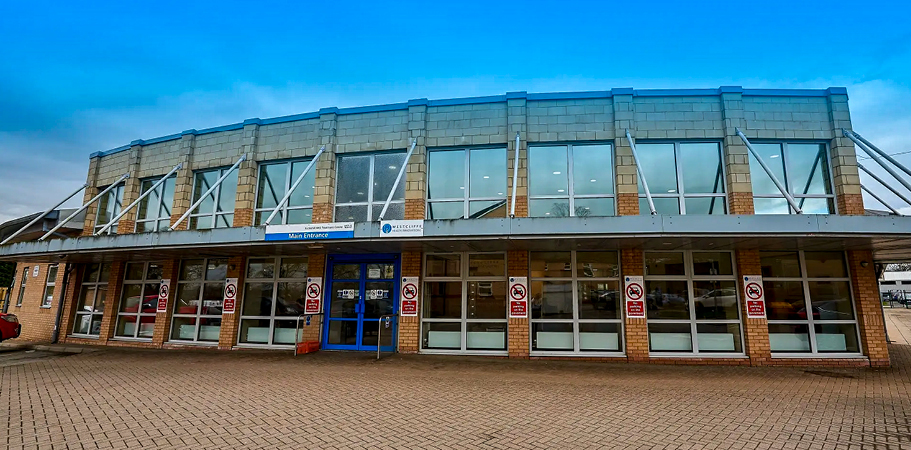
Improving Indoor Air Quality in Practice
Improving IAQ does not always require full system replacement. In many cases, meaningful improvements can be achieved through better system optimisation, regular maintenance, and the introduction of monitoring technologies.
A structured approach, combining ventilation upgrades, filtration improvements, and planned preventative maintenance, can significantly enhance air quality while maintaining operational efficiency.
Indoor Air Quality is a fundamental component of commercial building performance. It affects how people feel, how they work, and how buildings operate. From productivity and absenteeism to compliance and energy use, its impact is both wide-ranging and measurable.
For facilities managers, improving IAQ is not simply about meeting standards, it is about creating environments that support performance, resilience, and long-term value. To help achieve this, Watsons Building Services have decades of experience in well-designed ventilation strategies, effective system integration, and consistent maintenance over the lifecycle of the building.
Disclaimer: The data trends presented in this article are based on published research and recognised industry guidance, including studies from Harvard T.H. Chan School of Public Health, CIBSE, ASHRAE, and the World Green Building Council. Some charts illustrate typical relationships observed across multiple studies and are intended to reflect industry-consistent patterns rather than a single dataset.
Need to improve your building's air quality?
Connect with Watsons Building Services and discover how our expertise and experience can design and install energy-efficient ventilation systems.